
A Smart Scientometrics Approach: Health System Resilience and Sustainable Security
Deputy Minister for Research and Technology: The Fourth-Generation Medical University Puts Knowledge to Work for Society
Speaking at the Scientometrics Conference of Medical Sciences Universities, the Deputy Minister for Research and Technology at the Ministry of Health described the fourth-generation university as one whose knowledge feeds into decisions, policies, and behaviors and improves people’s quality of life
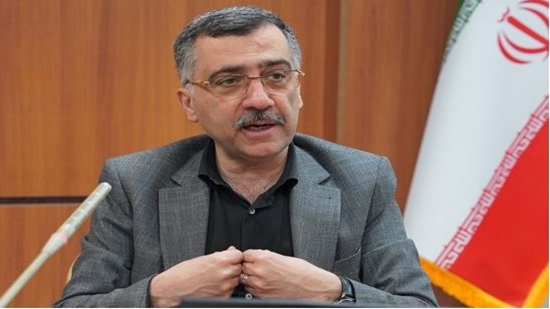
He emphasized the importance of “knowledge translation” and of measuring the social impact of research. According to the university’s website correspondent, Dr. Shahin Akhondzadeh made these remarks at the 12th Conference of Heads and Experts of Scientometrics Offices of Iran’s Medical Sciences Universities, themed “Smart Scientometrics: Health System Resilience and Sustainable Security.” Reflecting on the place of research in higher education, he observed that research remains one of the university’s core pillars, but assessing research performance should not be reduced to the number of articles, citation counts, or indicators such as the impact factor. He went on to note that scientometric systems have, over the past years, made it possible to evaluate and compare the scientific activity of researchers and universities. These systems still face challenges, however: some researchers’ or articles’ records are not entered correctly, and researchers’ academic records need updating after they relocate or change institutions. Despite these shortcomings, he maintained, building scientometric systems has been an important step in assessing scientific activity. “Now we need to go one step further and ask what impact the knowledge we produce has had on society.”
From Articles to Social Impact
Calling for a shift in how research is evaluated, Dr. Akhondzadeh pointed out that a researcher may have published many papers and attracted a good number of citations. “The real question,” he stressed, “is how far that knowledge has led to practical application, problem-solving, policymaking, or better services.” He described knowledge translation as one of the requirements for moving medical universities toward the fourth generation. “In a fourth-generation university, producing knowledge is not the end of the job,” he explained. “Knowledge has to reach different groups in society in language they can understand, and it has to be able to turn into decisions and action.”The ultimate goal of the academic and research system in the medical sciences, he added, should be to help increase life expectancy and improve people’s quality of life. The value of a piece of research therefore does not end with its publication in a scientific journal. What matters just as much is its effect on the health of the community.
Tools for Knowledge Translation
Outlining the range of knowledge translation tools, the Deputy Minister noted that educational videos, digital content, brochures, the media, podcasts, and social networks can all help carry scientific findings to different parts of society. He explained that the right tools depend on the audience. Physicians and specialists can be reached through more technical channels. For managers and policymakers, the message of a study has to be presented in a form they can use when making decisions. For patients and the general public, plain language and communication tools suited to those groups are needed.
He also pointed to emerging trends in scholarly publishing, noting that some scientific journals now prepare an accessible summary of a study’s findings for general readers alongside the article itself. Sharing simplified scientific content through the media and social networks, he added, can also widen the reach of research.
The Need to Rethink Research Evaluation
On the need to reform how scientific work is assessed, Dr. Akhondzadeh put it this way: “If universities want to become fourth-generation institutions, indicators that measure the impact of knowledge must sit alongside conventional scientometric indicators.”
Research reaches its goal, in his view, when the knowledge it produces is placed in the hands of society, informs policymaking, helps change behavior, or leads to better performance and services. He announced that the Deputy Ministry plans to give more weight to knowledge translation and impact indicators in its evaluation framework. The aim, as he put it, is that in future, scientific evaluation systems will also take knowledge translation indicators into account, so that researchers are assessed on the real impact of their knowledge, and not only on publications and citations. He also spoke about the considerable capacity of basic science researchers. “We should not judge the valuable work of basic scientists purely by how many papers they have published,” he cautioned. “Some researchers have been active for years, and their work appears in university textbooks, clinical guidelines, educational materials, the media, and scientific references. That, too, needs to be recognized when we assess
the impact of science.”
The Fourth-Generation University Must Turn Knowledge into Decisions and Policy
Stressing the importance of moving medical universities toward the fourth generation, the Deputy Minister emphasized that knowledge translation does not end when knowledge is published. “The path we want,” he continued, “is one where knowledge becomes decisions, decisions become policy, policy changes behavior, and in the end it produces an outcome that society can measure.”Dr. Akhondzadeh added that this path leads a university toward becoming a fourth-generation institution. “In such a university, the knowledge it generates does not stay inside articles and journals,” he went on. “It reaches society and is used to solve problems, inform decisions, shape policy, and improve people’s quality of life.”
He added that this matters even more in the medical sciences, because these universities do more than teach and conduct research. By delivering health and treatment services, they are in direct contact with the public, and they must be able to put the knowledge they produce to work for people’s health and quality of life. With the new academic year approaching, Dr. Akhondzadeh also spoke about keeping university life vibrant. “We have to be careful that the atmosphere in our universities does not drift toward despair,” he warned. “Universities and students need energy, hope, and motivation to keep moving forward. The lamp of research must stay lit, so that the university stays lively and students stay hopeful and engaged.”

نظر دهید